Oak and Authenticity: Interior Designer Katie Malik on Creating Healthy Homes That Last
May 01, 2026
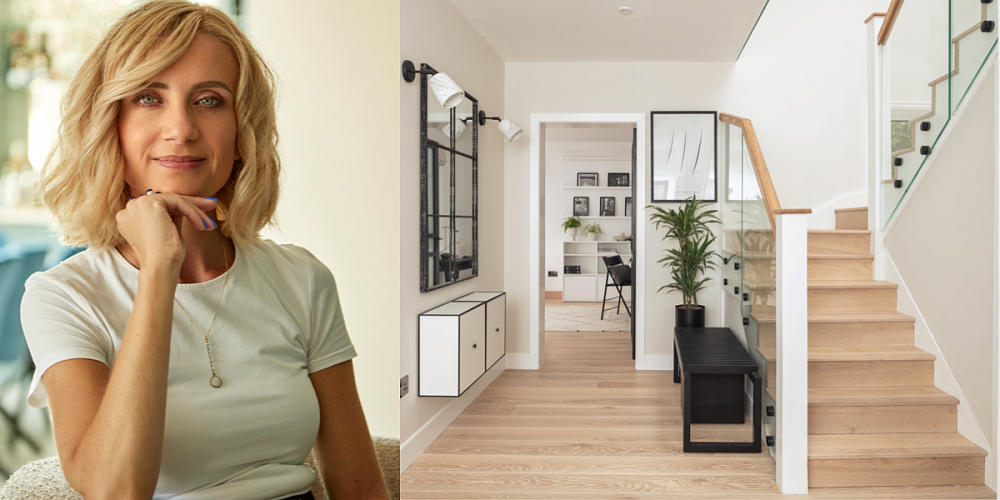
From oak flooring and oak doors to wall panelling and furniture, oak has remained one of the most desired natural materials in interior design for centuries. With so many material choices available today and new innovations constantly emerging, what keeps oak at the heart of design?
For Katie Malik, the answer goes far beyond aesthetics. As the founder of Katie Malik Design Studio, she has spent more than a decade designing homes around one principle: choosing materials that not only look beautiful on day one, but continue to improve with time.
From oak flooring and oak staircases to bespoke furniture and architectural details, Katie believes oak remains unmatched for its versatility, durability, sustainability, and ability to create healthier, more authentic living spaces.
In this O.A.K. Talks* interview, she shares why natural oak floors continues to outperform synthetics, how homeowners are becoming more conscious about sustainable materials, and why good design is as much about how materials age as how they first appear.
Oak has been used in homes for centuries. Why do you think it still holds such a strong place in interior design today?
Because oak is incredibly versatile. It works beautifully in both traditional interiors and very contemporary spaces, which is rare for any material. Humans have lived around wood for centuries — it’s something we naturally connect with.
There’s a real honesty to oak. It feels authentic. People respond to that authenticity immediately. It has warmth, texture, and character, and I think that connection is instinctive. That’s why it has lasted for so long — and why I believe it will continue to be part of our homes for centuries to come.
How does oak improve a home in terms of functionality, acoustics, and aesthetics?
As we’ve said before, oak is an incredible material because it’s so versatile. Oak has a beautiful natural texture, and it can be used in so many ways — whether in flooring, furniture, wall panelling, oak stairs, or architectural details. And it can be adapted in very subtle and nuanced ways depending on the design.
Oak also does much more than simply look beautiful. Beyond aesthetics, oak contributes to how a home feels and functions. Natural materials like oak bring warmth, texture, and authenticity into the home, and those qualities have a direct impact on wellbeing and the overall experience of living there.
With so many synthetic options available today, such as laminate and LVT, what still makes oak flooring the superior choice?
To be honest, for me it almost feels like an obvious answer. Oak floors outperforms LVT and laminates on so many levels. Sometimes people choose synthetic materials because they’re trendy or because they want to save money — and that’s the reality.
I always come back to the idea of creating a healthy home. It’s something our clients care deeply about, and it’s something we care deeply about delivering. If your goal is to create a healthy, authentic home environment, you’re not going to choose LVT over oak. Even if you’re new to materials and still learning, if you place LVT floors next to real oak floors, you will immediately see the difference. And once you start touching the materials — or better yet, walking on them barefoot — that’s the real test. Oak feels warmer, softer, natural.
And perhaps most importantly, it ages in a way synthetic materials simply can’t. Oak floors develop character over time, while synthetic flooring tends to wear out rather than evolve.
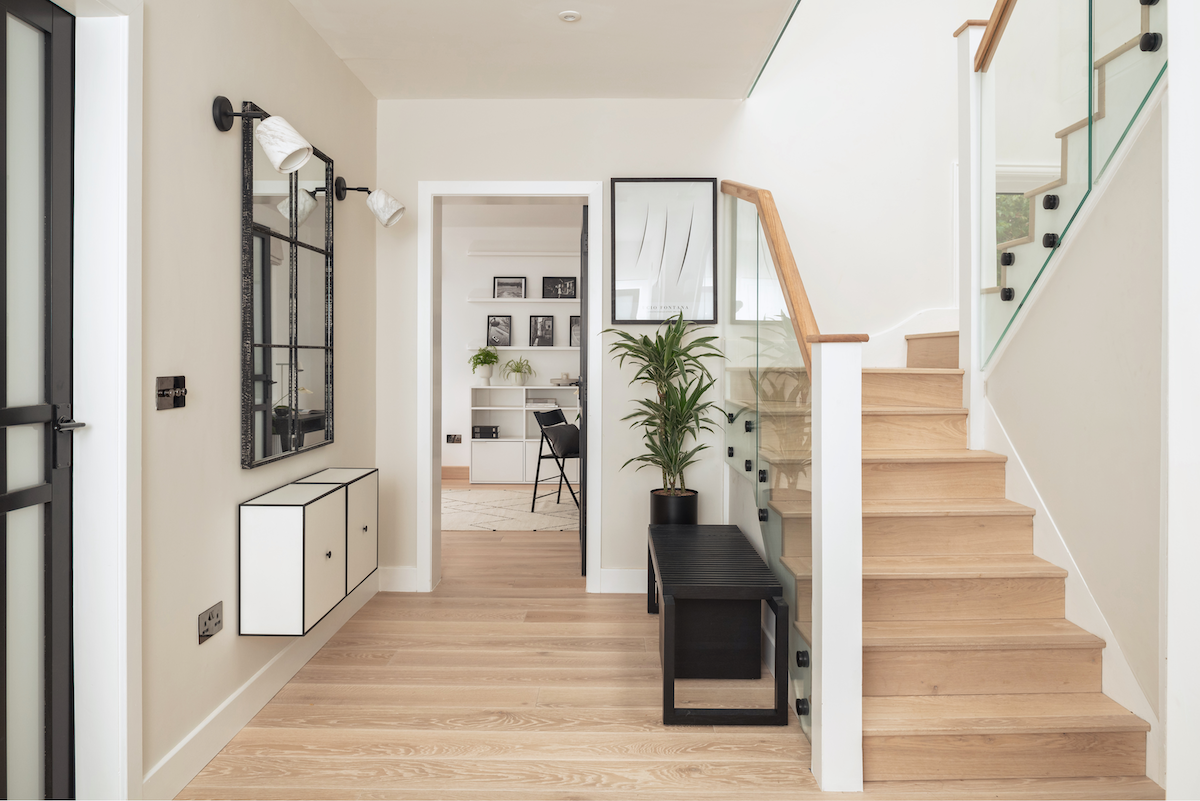
Katie Malik interior project in Cambridge. Oak floors: Ecohardwood. Colour: Ivory. Grade: Select. Installation: Ecohardwood Contractors. Photo: Maciek Platek.
Is flooring often where clients try to cut costs?
All the time. And honestly, it breaks my heart sometimes. Clients spend so much time and money creating beautiful homes, and then flooring becomes the compromise because it’s one of the last items in the budget. But flooring is one of the most permanent elements in a home. It will outlast most of the furniture, finishes, and even some structural elements. That decision should be made early — not at the end.
In an age of growing awareness around health and sustainability, why do synthetic materials still dominate our homes?
Because value is misunderstood. And honestly, some people still don’t value their health enough. That sounds blunt, but it’s true. People often choose materials because they look good or because they’re cheaper, without thinking about how those materials affect their home environment over time. The long-term impact matters. Health matters. Material quality matters. And awareness around that is growing. It’s already happening. I think it’s only a matter of time before that becomes a much bigger part of how people make decisions in their homes.
You’ve spoken about the importance of how materials age — why does that matter so much in design?
Because good design isn’t just about how something looks on day one — it’s about how it looks in ten years. Good design is about how materials age gracefully. Sometimes I come back to projects years later and see how the space still looks beautiful despite the passage of time. And often, it’s even better. It’s almost as if the space has evolved its own character over time. And that’s when you really know the design was successful.
And that’s the beautiful thing about oak — whatever happens to it, however the light changes it, however it scratches or ages, it tells a story. That’s what oak does. It carries memory. It evolves. And increasingly, people want homes that feel personal and tell stories. Not perfect. Real. Because we’re not robots, after all.
Has the way we use oak floors, doors or other oak materials changed since you started in the industry?
Absolutely. Oak is still widely used, but the conversation around it has evolved. When I started, clients focused much more on aesthetics. They wanted something beautiful and practical. Now, clients are asking much deeper questions. That shift has been significant.
People are making much more conscious choices today. It’s not that clients didn’t care before — they simply cared less. Now they want to understand exactly what they’re paying for. They want to know the value behind the design decisions, the quality of the materials being used, and whether those choices are right for their home in the long term.
What has changed most in the last five years is access to information. Clients are doing their own research now. They’re reading, comparing, and asking much more informed questions than they used to. Of course, they don’t have the supplier relationships or the technical knowledge that we have as designers — and that’s why they come to us, to bring everything together and guide those decisions. But they are asking the same difficult questions we ask. For example: Where does this material come from? Can its sustainability be verified? How will it perform over time? And honestly, that’s a good thing. Because if I can’t answer those questions confidently, or if I can’t verify a material’s origin, then how can I responsibly recommend it to a client?
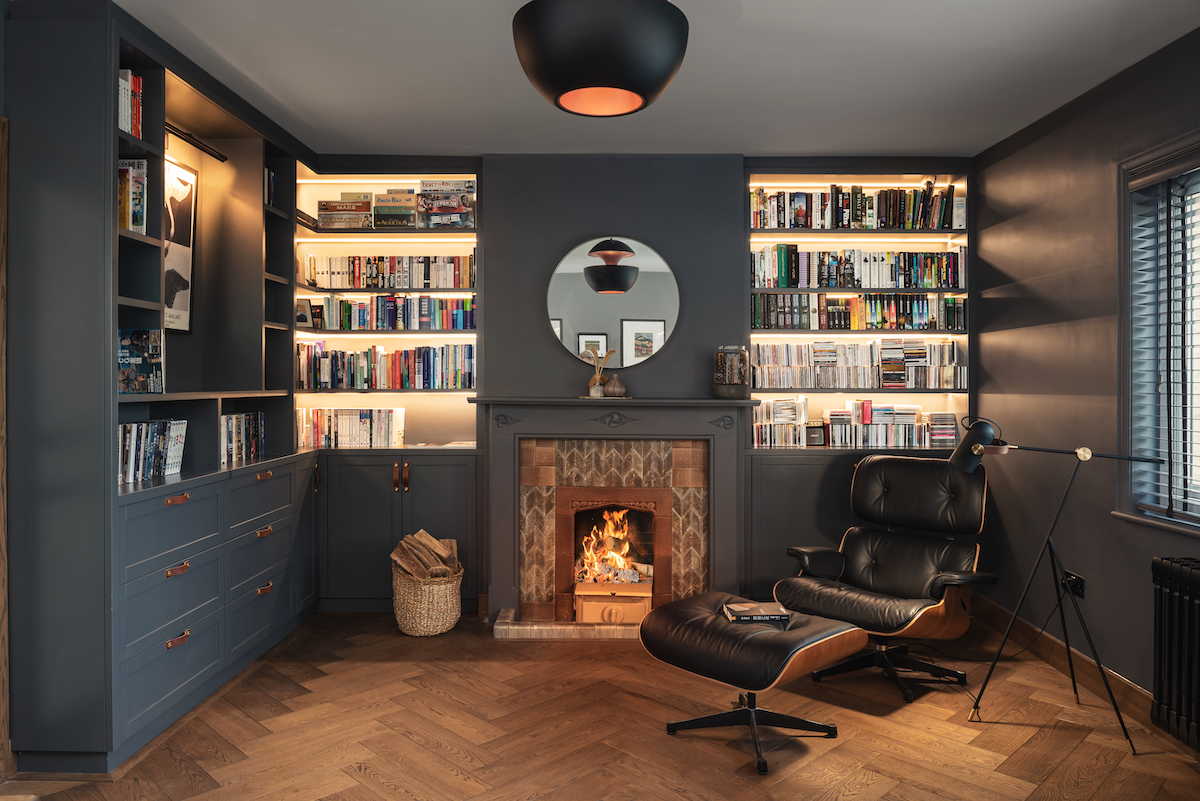
Ecohardwood herringbone oak parquet. Colour: Walnut. Interior: Katie Malik Studio. Photo: Maciek Platek.
What does sustainability mean to you when choosing materials?
For me, sustainability is about transparency. There’s a lot of greenwashing in the industry right now — a lot of marketing stories around sustainability that sound good but don’t always tell the full truth. That’s why due diligence matters. It’s important to have good supplier relationships, but it’s equally important to ask questions.
Certifications are important, of course, but they are not the full story. Good sustainability is more than a certificate. It’s about understanding the full journey of the material. And if a supplier avoids answering those questions, that tells you something.
What’s one “rule” of working with oak that you like to break?
This might be controversial… But sometimes, I like to paint oak. Not always — and not everywhere. But when it’s done thoughtfully, it can work beautifully. Especially if the grain still shows through. It creates another layer of texture and can help a piece blend into the wider scheme. I know some people think that’s almost sacrilegious. But design is about context. Sometimes breaking the rules creates the best results.
*O.A.K. (Origin, Architecture, Knowledge) Talks by Ecohardwood is a conversation series exploring how to choose, use and understand oak - sharing practical insights from designers, architects and industry experts on materials, craftsmanship, sustainability, and creating better, healthier homes built to last for generations. This conversation was part of O.A.K. Talks, hosted at the Ecohardwood showroom in West London on Earth Day, 22 April.