Restoration of a 16th-Century Manor: Embracing Slow Living in Historical Boutique Apartments
Dec 16, 2024
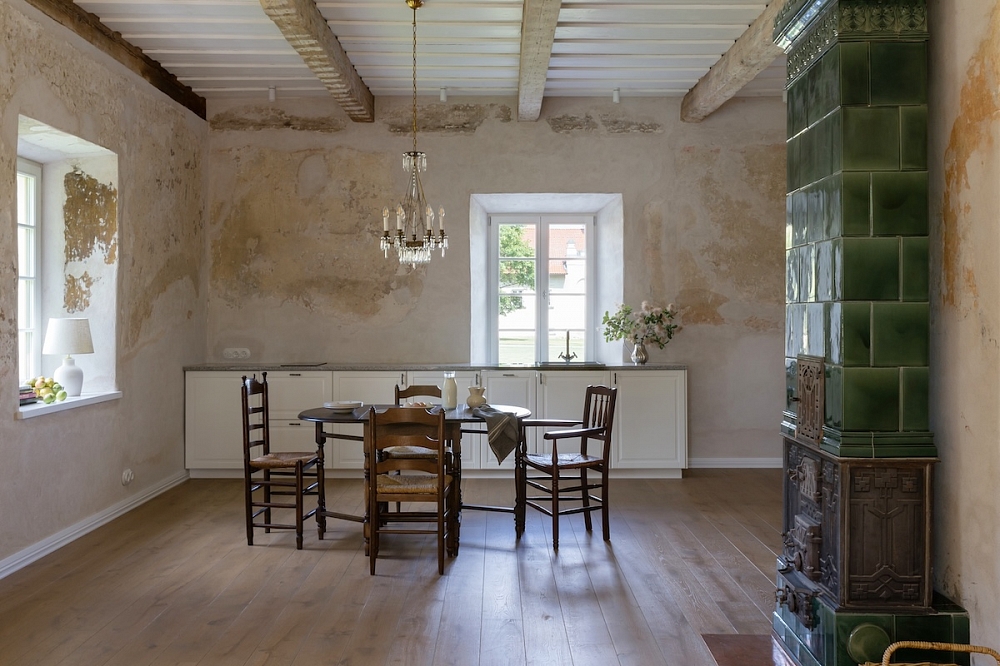
Hidden in the serene landscapes of Lithuania, the Aštriosios Kirsnos Manor* stands as a testament to resilience, restoration, and the enduring beauty of cultural heritage. With over 500 years of history woven into its walls and surrounding parklands, this remarkable estate has not only been preserved but lovingly brought back to life. (* Kirsna is a stream that flows through this area. The word Aštrioji seems to be a Lithuanian adaptation of the Polish word Ostrów, which means "a small island.")
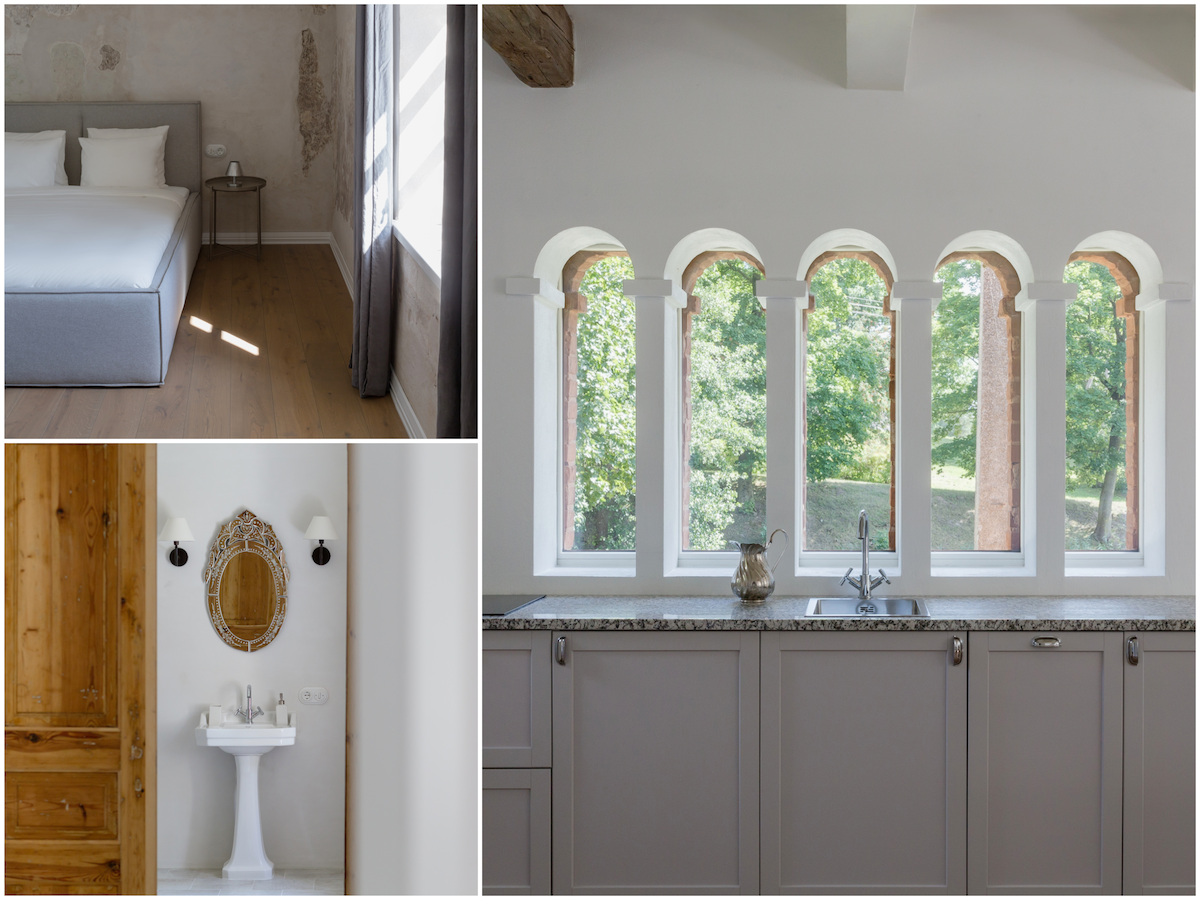
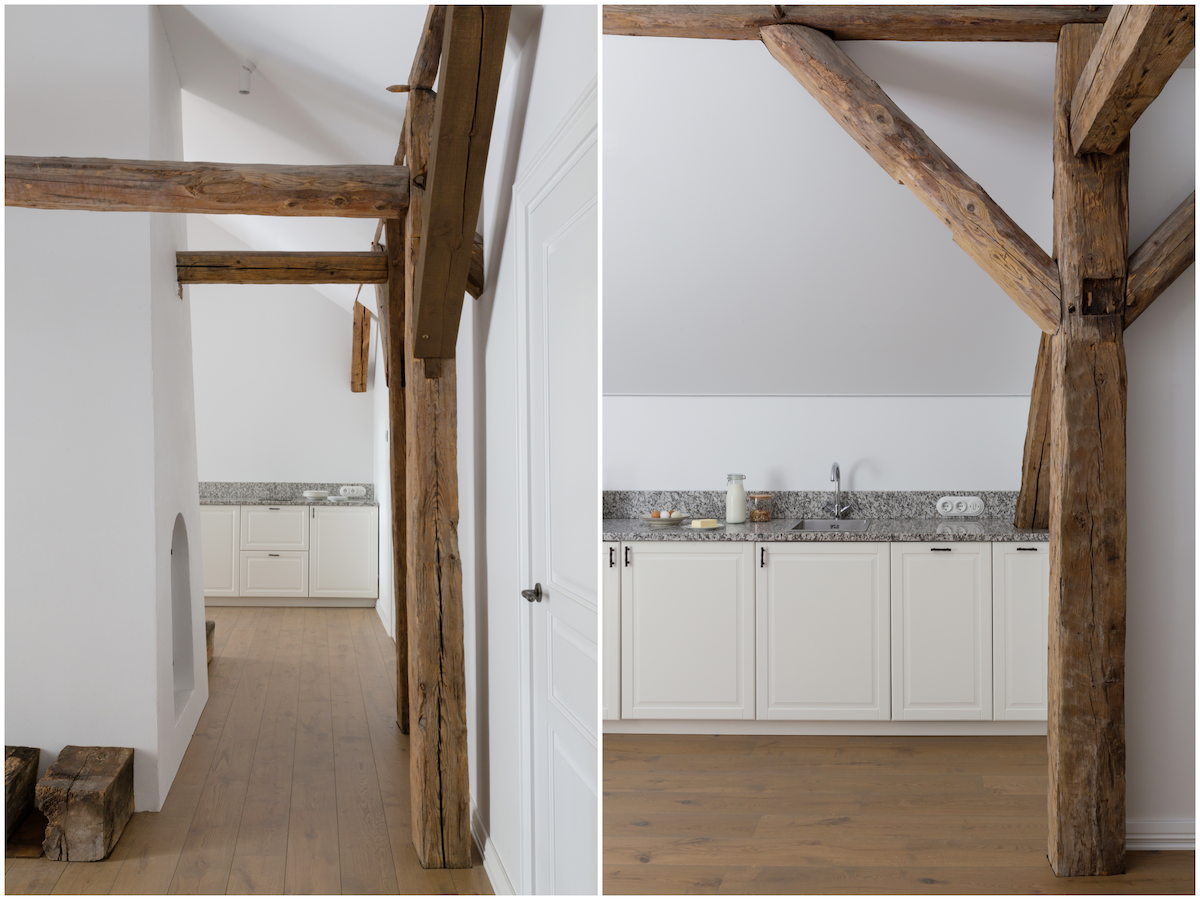
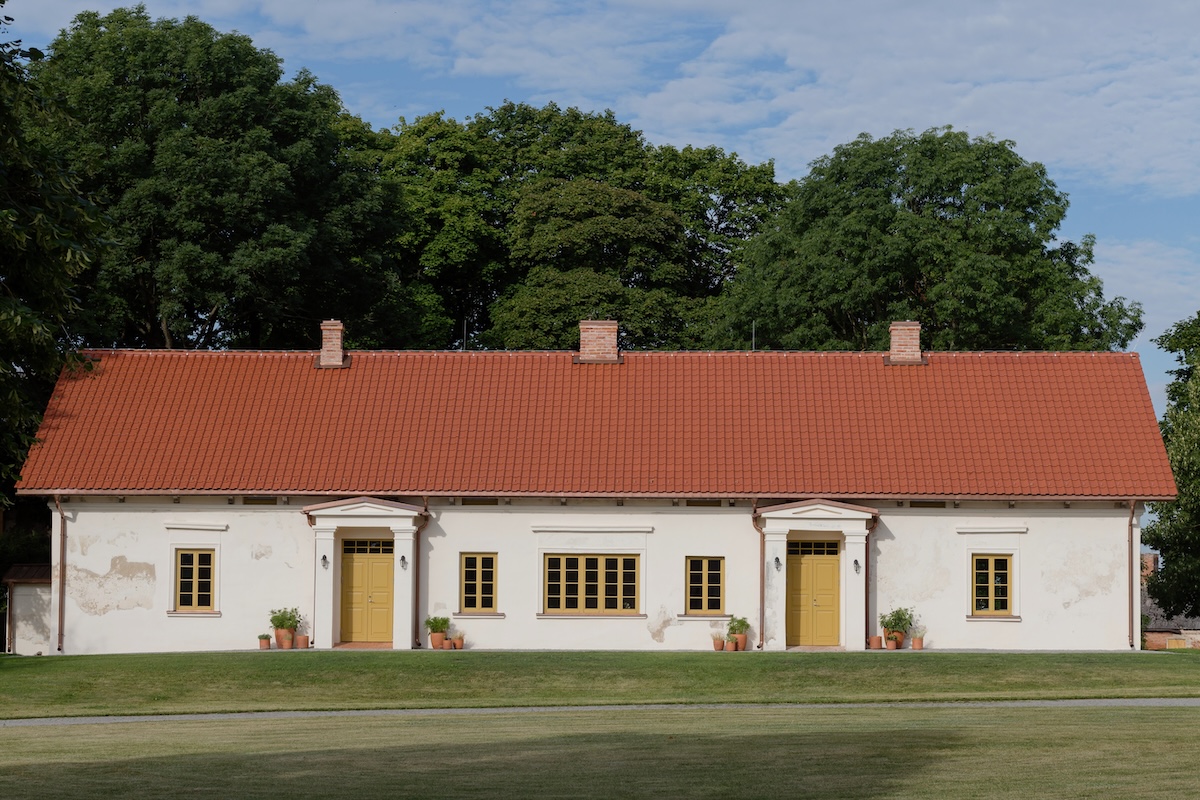
For Goda, whom we spoke to, and her family, the manor is more than an architectural gem - it is a second home. Their restoration journey began with the manor’s sprawling park - overgrown, forgotten, and waiting to reveal its romantic, English-style charm. Over time, this dedication extended into the manor's interiors, where the family has carefully converted historic service buildings into boutique apartments. Ecohardwood oak floors in Granola colour were selected for the project, complementing the restored spaces with natural beauty and longevity.
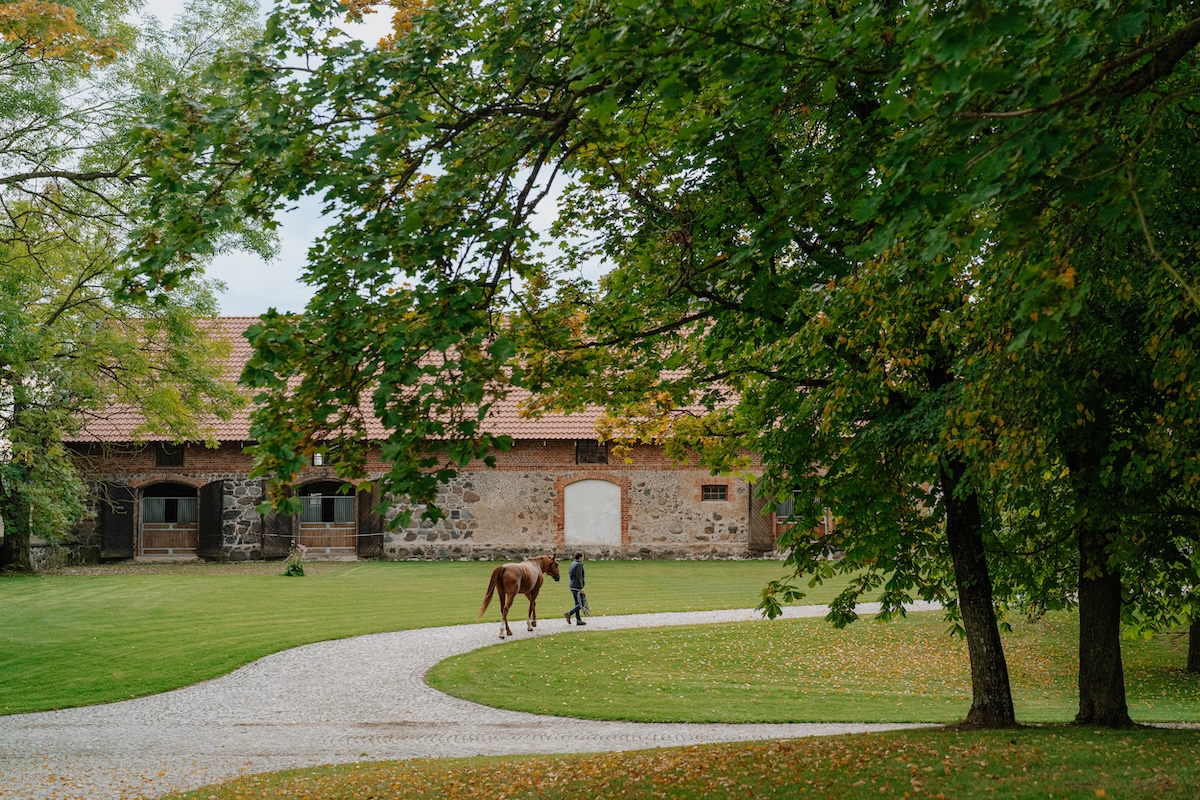
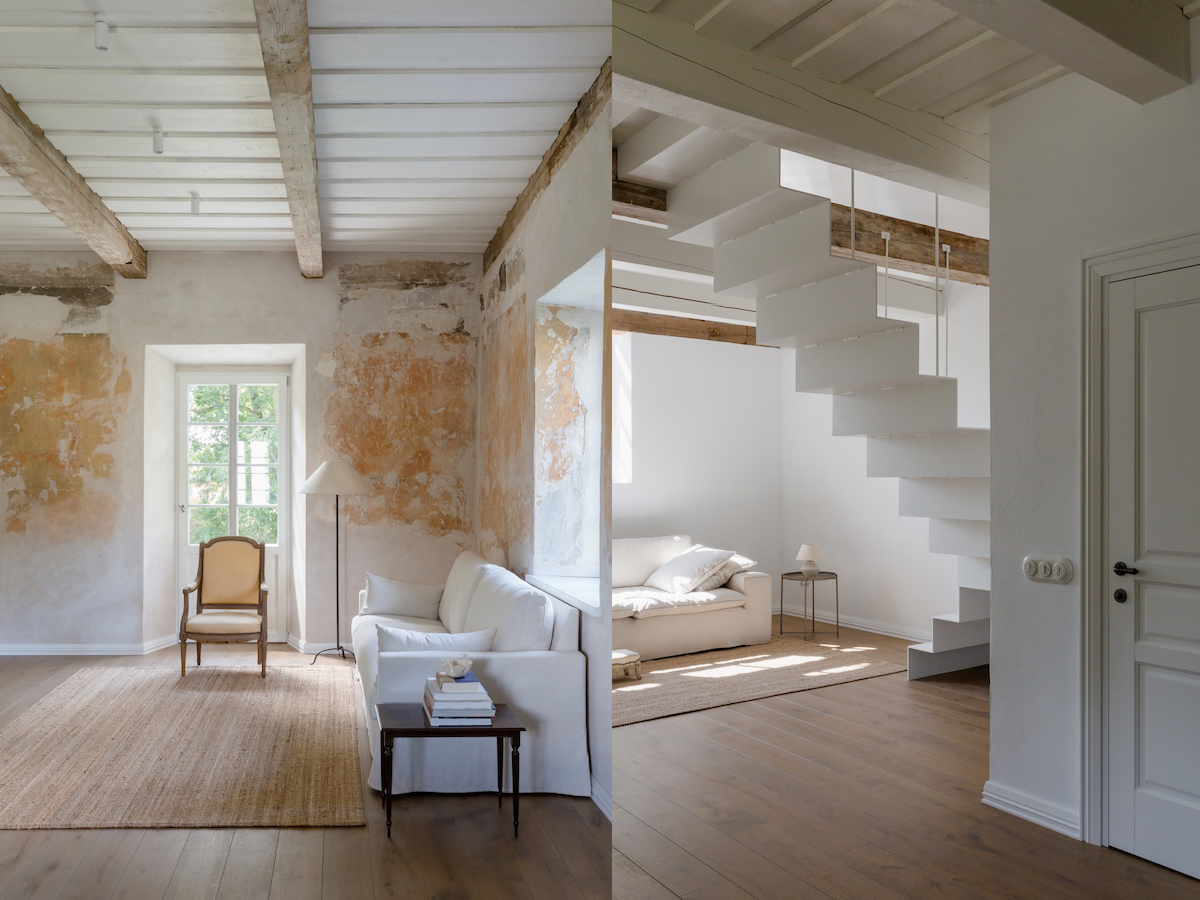
The photos are courtesy of Aštriosios Kirsnos Manor, with photography by Dovalde Butenaite and Danas Macijauskas.
In this interview, we explore the family’s tireless efforts to honour the estate's authenticity. From clearing decades of neglect in the park to uncovering fragments of craftsmanship lost during Soviet times, their story reveals not only a dedication to heritage but a commitment to sharing its quiet beauty with others: everyone can explore 19 hectares of cultural heritage with 19 surviving buildings, historic park or stay in one of 6 boutique apartments.
At Aštriosios Kirsnos Manor, visitors are invited to step away from the rush of modern life and immerse themselves in the stillness of this retreat. Whether stargazing, taking long walks, or simply savouring moments of peace in its beautifully restored spaces, the manor offers the slow beauty of being present.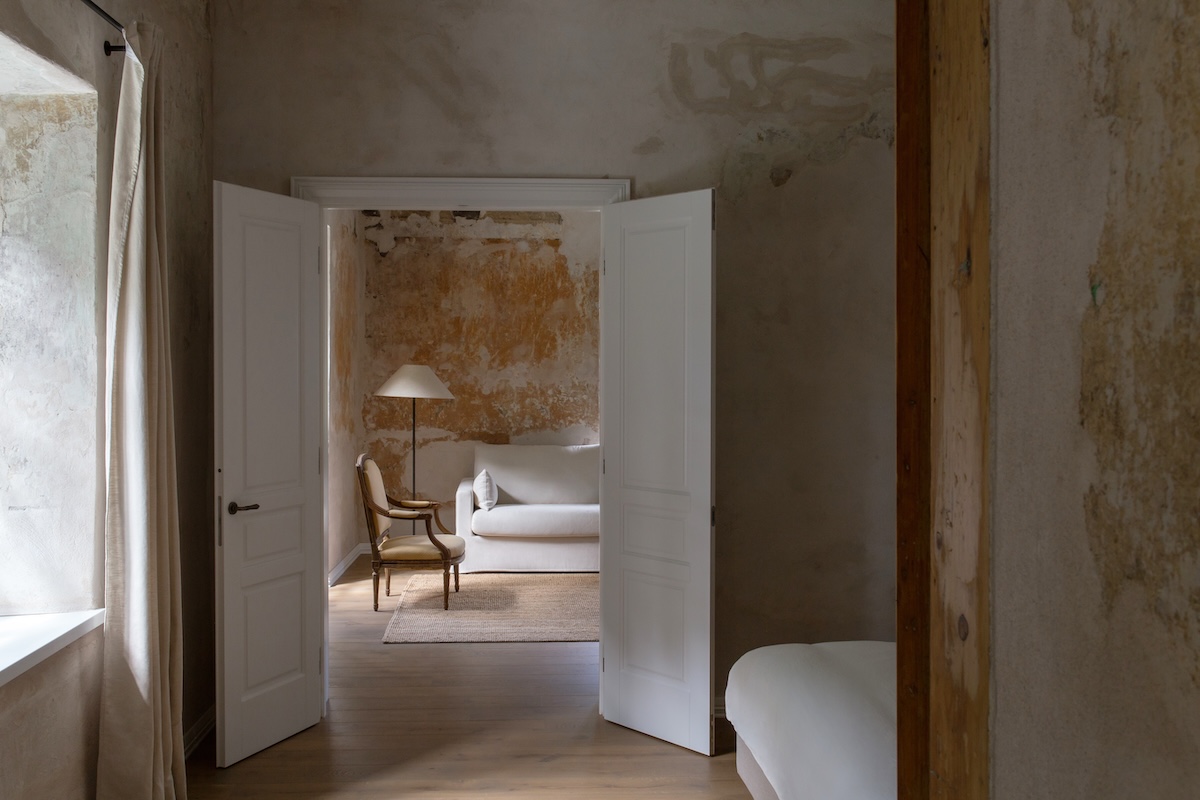
What are your favourite rituals or activities at the manor that help you feel the peace and uniqueness of this place, that slow way of being you emphasize and encourage?
Although we offer visitors a range of activities, we like to say that this place is best suited for doing nothing: stargazing, long walks, dreaming, resting, and recharging. Every time we come here, we seek and find exactly that.
For you, the manor is not just a historic place but also a second home. How do you balance your personal connection to this place with opening it to visitors? Is it sometimes difficult to share spaces that are so close to your heart?
It’s not easy to open such a cherished home to the public, especially when trying to maintain order and tranquillity. However, we are learning to share, and it’s important for pursuing any activity here.
In England, architects sometimes recount discovering hidden treasures, like stunning oak floors hidden beneath old carpets or intricate walls buried under layers of wallpaper. Have you made any similar unexpected discoveries that revealed the work of past craftsmen? Were you able to preserve or restore any of these authentic details?
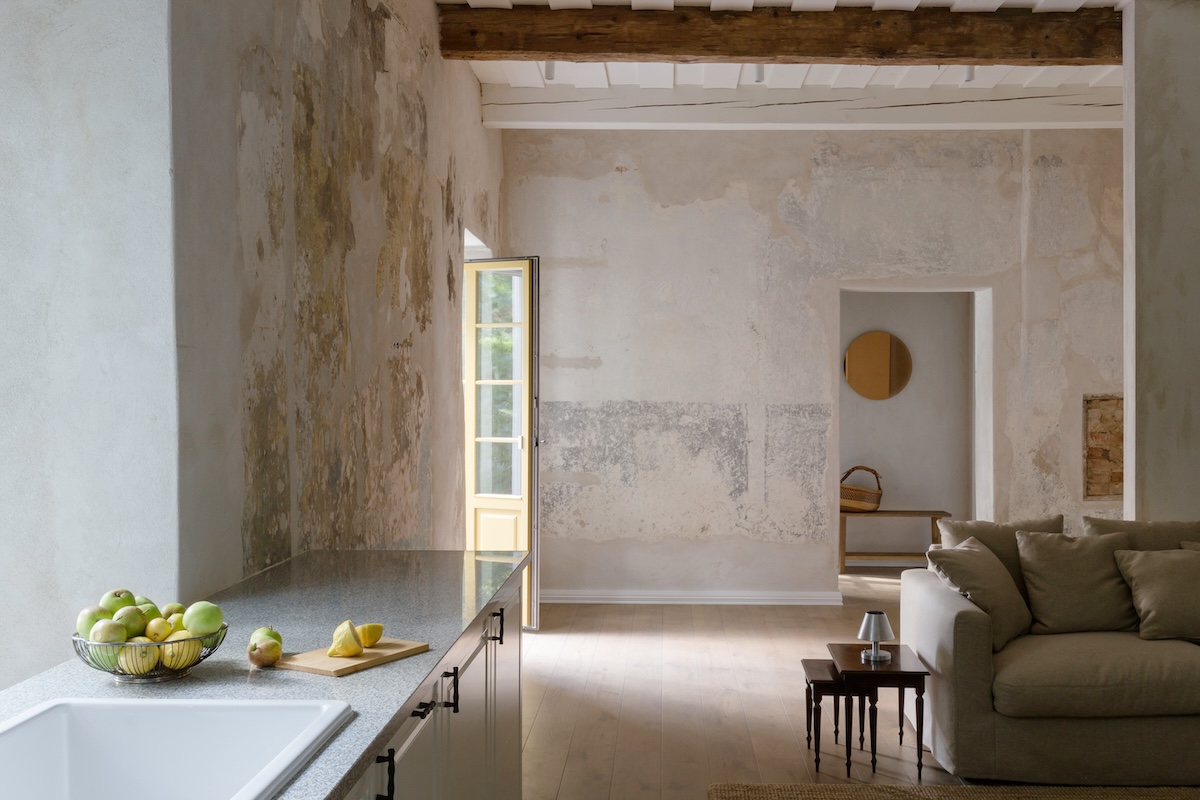
During the Soviet era, the manor became a collective farm, its buildings occupied chaotically by people from various places. It was a destructive time, with little care for history, heritage, or architecture. Structures were adapted as needed, often without aesthetic consideration. For example, 19th-century wall paintings of exceptional craftsmanship were covered with then-popular oil paints, which are now incredibly difficult to remove. Wooden elements like shutters, doors, and stair railings were likely used as firewood, replaced with much simpler versions. Fortunately, a few elements survived, allowing us to recreate pieces based on these remaining examples. However, some details, like the ceramic stoves that once stood in every room of the manor, are entirely lost, as are the furnishings and artworks – everything was stolen or taken during the Soviet period.
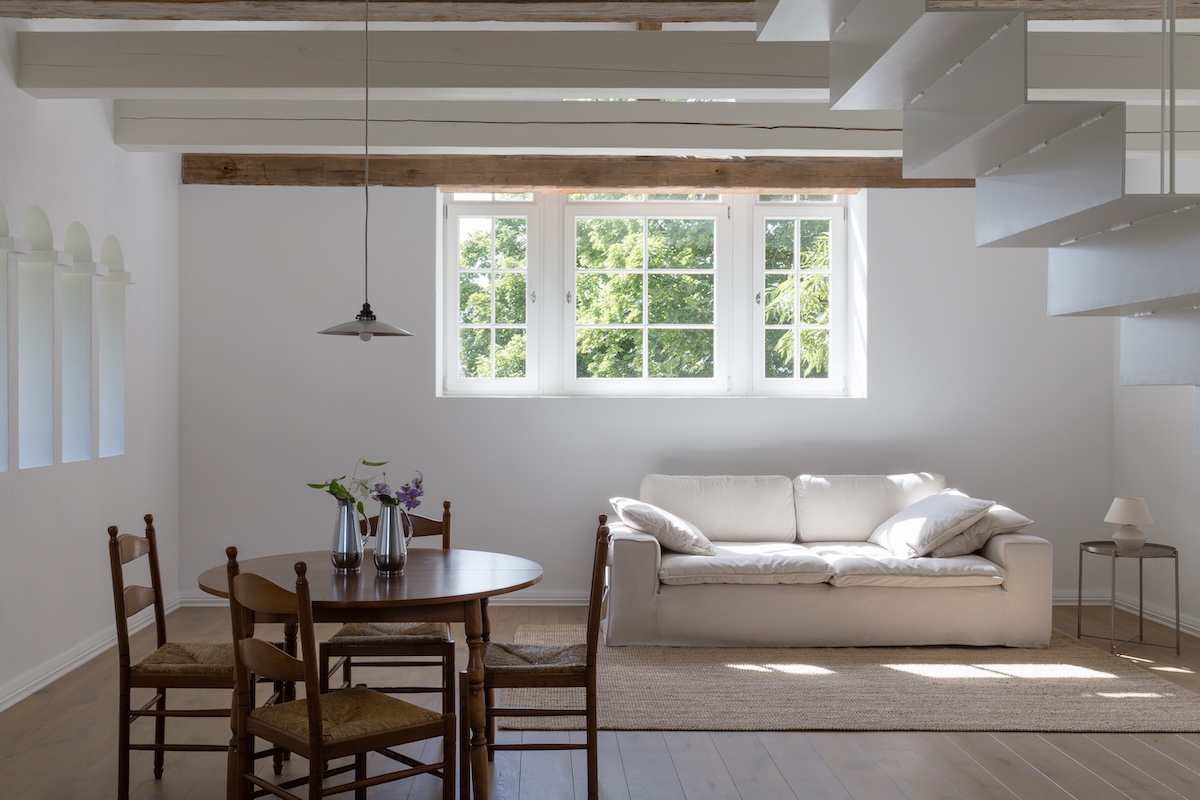
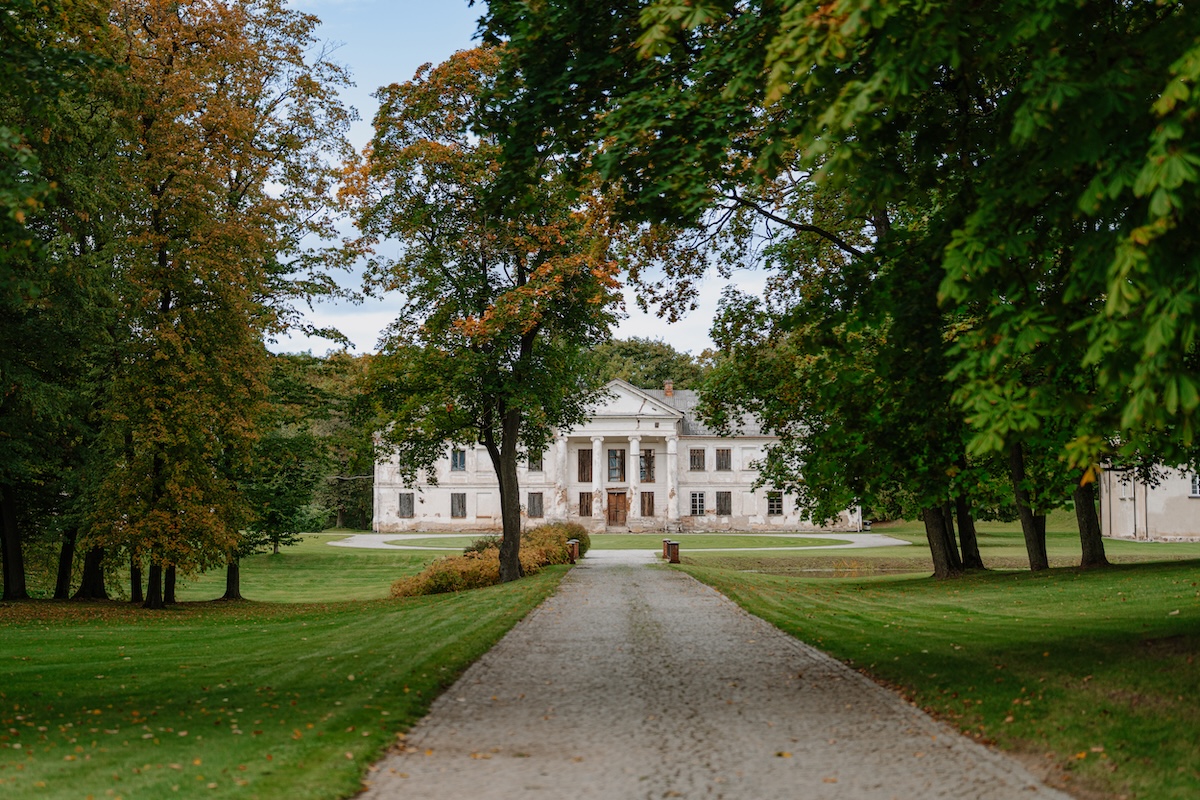
Restoring cultural heritage sites requires specific knowledge, precision, and financial resources. How much do you rely on specialists, and how much do you select materials or seek knowledge and inspiration yourself?
We work closely with specialists, constantly consulting and collaborating because their expertise is crucial in restoration. We learn a lot from them as well.
How did you decide to take on such a significant project, and how much time and energy do you dedicate to it?
We spent much of our childhood here, watching our parents’ efforts to restore the manor’s spaces to ensure the unique remaining elements weren’t lost forever. Our family has a tradition of organizing annual communal work sessions, during which, as children, we planted shrubs, pruned old trees, and sorted through the debris left in unrestored buildings. This care for the manor has been ingrained in us from a young age. After finishing our studies and recognizing our parents’ busy schedules, my sister and I voluntarily took on the responsibility of preserving and revitalizing the manor. We saw the potential for this place to become an authentic retreat for slow living, and we wanted to share this atmosphere and these experiences with others. Today, it is both our workplace and sometimes our retreat.
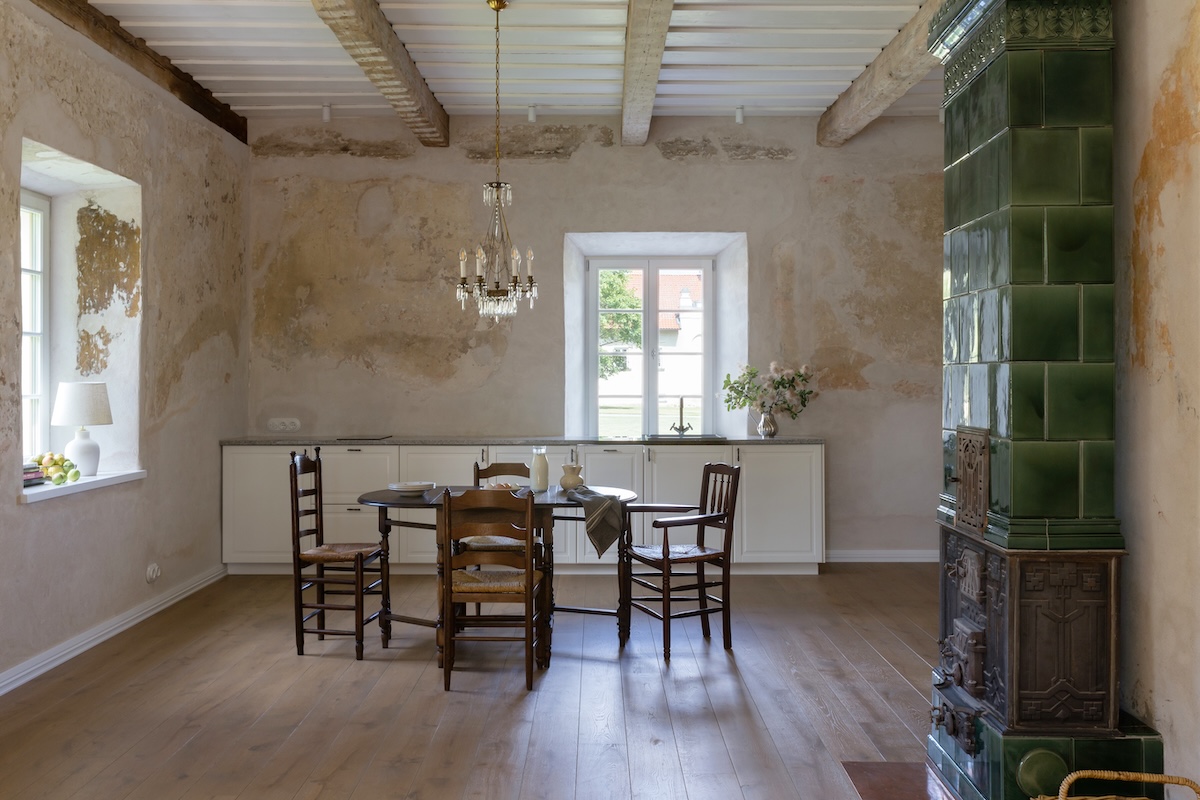
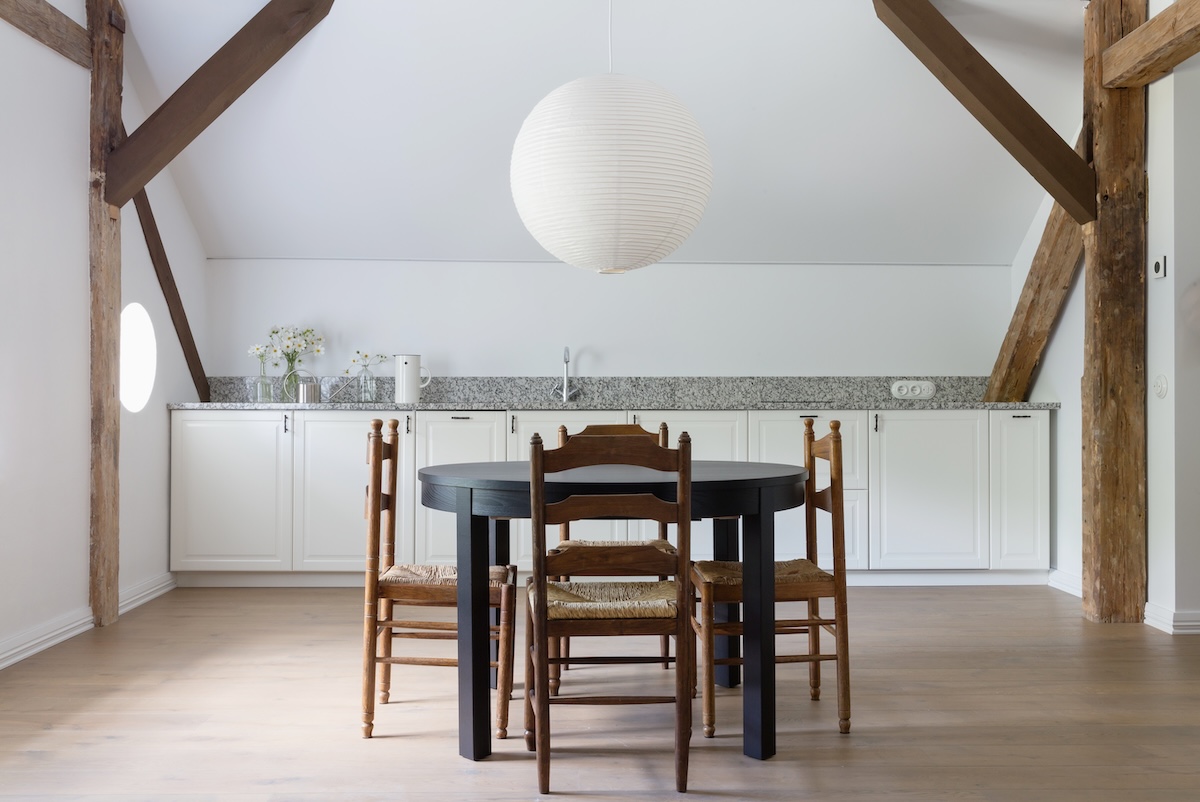
Durability, sustainability, and comfort are key principles in your manor restoration. How have these influenced your choice of materials, and what considerations guided your decisions?
When dealing with cultural heritage, you can’t act on a whim – you must adapt. Every cultural heritage object has defined valuable characteristics that must be restored or recreated (if they are severely degraded). For us, this is fascinating because we follow the principle of preserving everything authentic without interpreting what is irretrievably lost. We value what has survived to the present day. As such, we left many details untouched or restored them, resulting in walls showing all paint layers, exposed and painted original structures, and doors, windows, and wood floors recreated based on existing analogues. Even the room layouts remain unchanged. Of course, all this had to align with modern standards for comfort.
Your restoration journey began not with the buildings but with the park. What was it like to witness the unveiling of the romantic, English-style landscape for the first time?
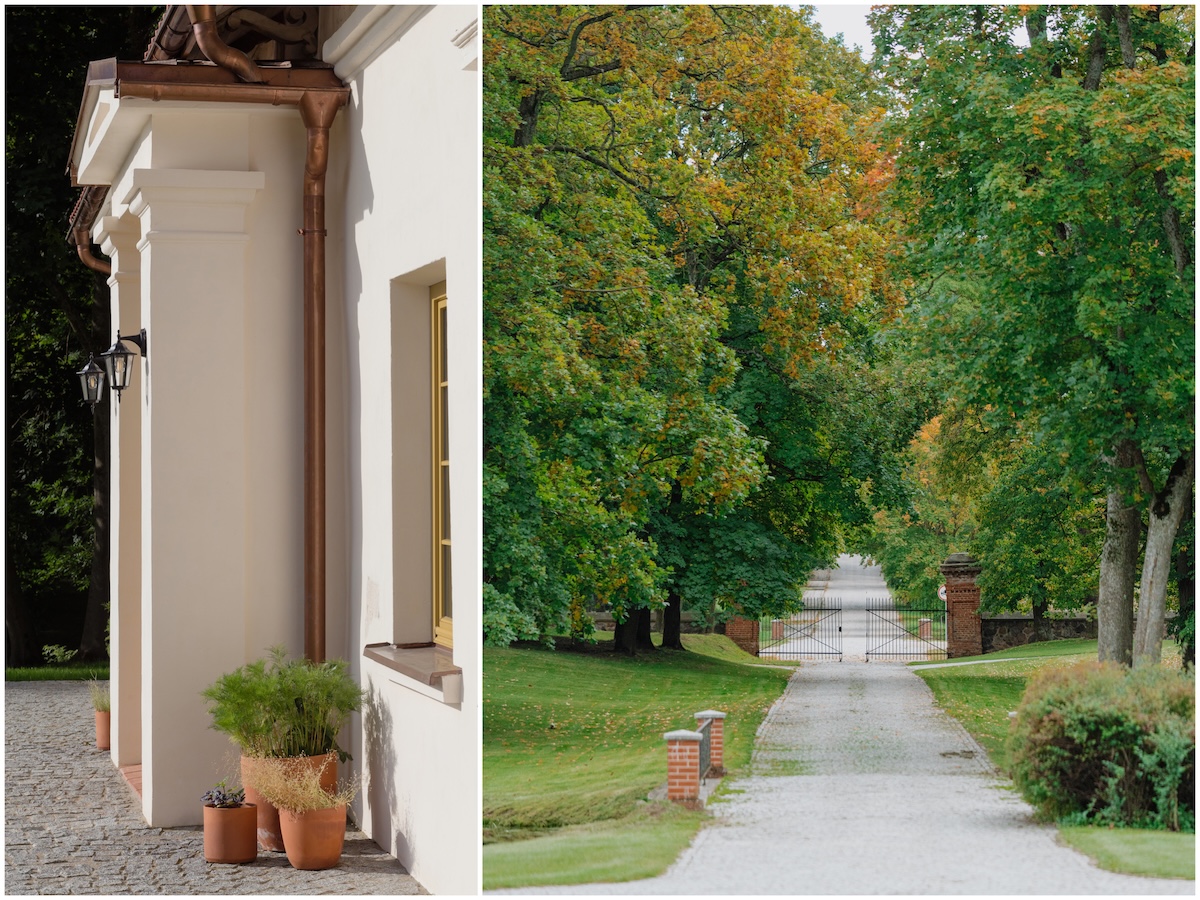
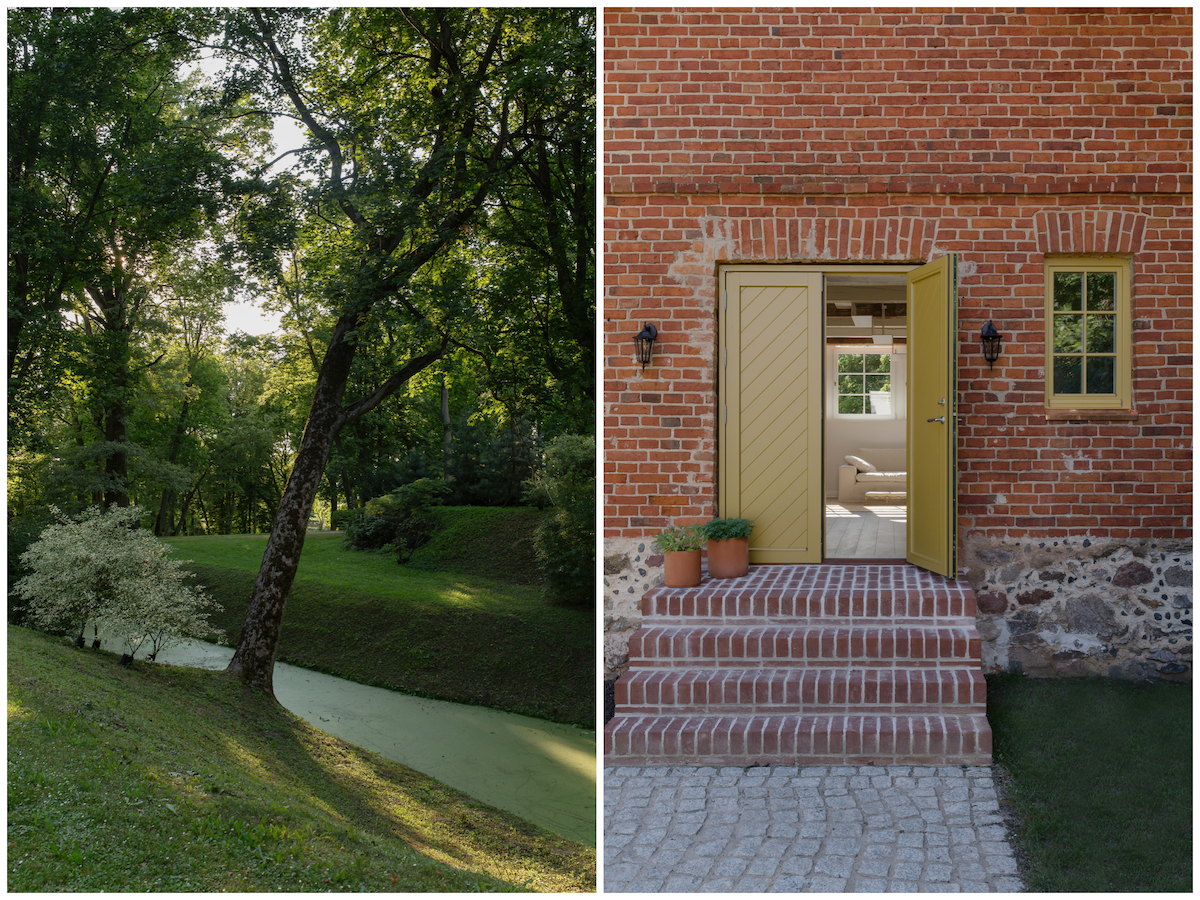
We began restoring the manor with its surroundings, including the historic park. Usually, buildings – especially the main manor house – receive attention first, but we took the opposite approach, which is still ongoing. Restoring the 19-hectare park took time and was divided into stages. First, we cleared Soviet-era thickets and low-value trees. Once this was done, the structure of mature tree alleys became visible, spaces opened up, and the different elevations of the landscape emerged. We aimed to identify the original bridge locations, recreate walking paths, and restore plant diversity. The park was established around 200 years ago, at the same time as the still-standing neoclassical manor. From that era, we still have a beech tree, two mighty oaks, and 35-meter-tall European larches.
Which manor space or building was the biggest challenge to restore due to its function, condition, or history?
So far, restoring the historic park has been our biggest challenge and longest project. However, the manor house is still waiting its turn, and it remains the most interesting building due to its history and value in the complex.
The Aštriosios Kirsnos Manor covers 19 hectares of cultural heritage with 19 surviving buildings and a historic park. You are not only restoring spaces but also reviving former activities. The manor now houses a dairy farm and a stable. Tell us more about the buildings, various activities, and any areas still awaiting renovation.
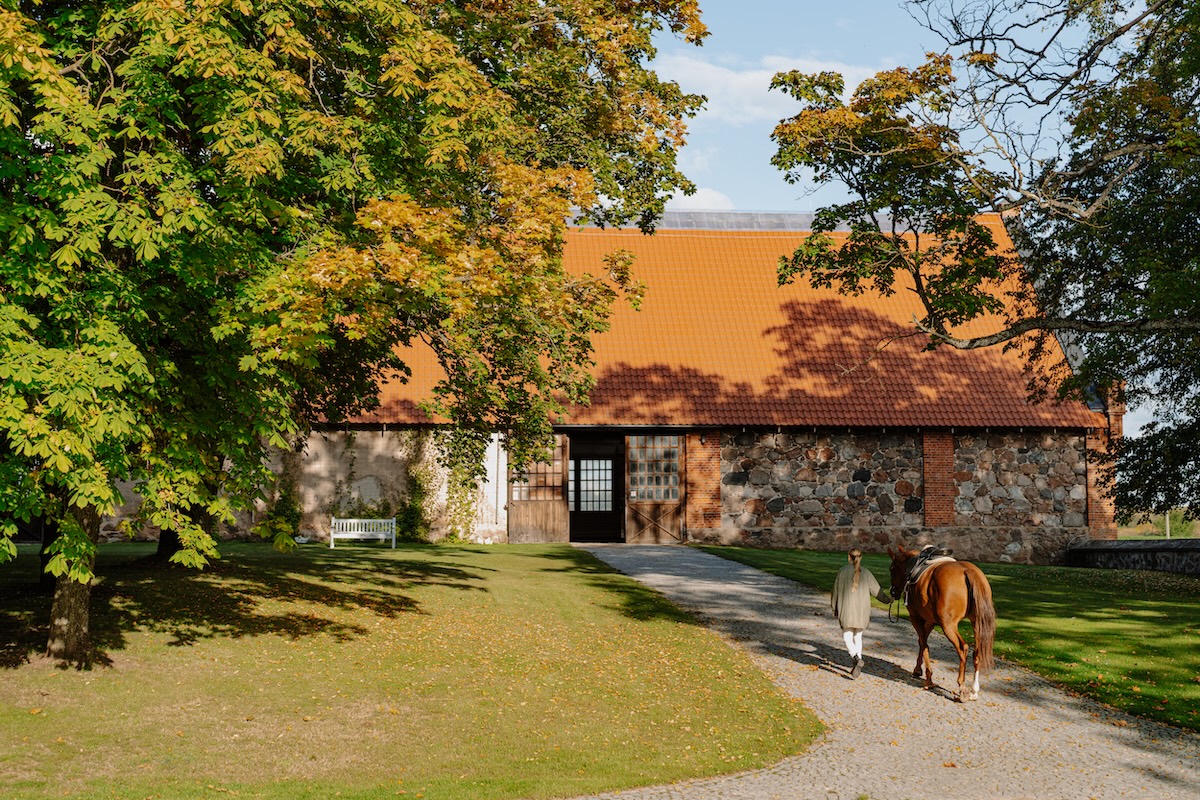
Horses have lived on the property since our family acquired the manor. At first, the stables were in such disrepair that we housed the horses in makeshift stalls in the old barn. The stable was established in honour of our great-grandfather and his service horse. In 2008, we restored the stables’ original function and rebuilt the barn into an indoor riding arena. Similarly, the farm emerged organically due to the sheer scale of the manor’s economic buildings and the realization that such a large estate couldn’t sustain itself without financial means. Today, the farm operates successfully, continuing the manor’s original activities.
What do visitors usually notice first? What surprises them the most?
The first thing visitors see is the manor gates adorned with mythological sculptures, which were stolen during the Soviet era. This year, we finally restored the gates to their historic appearance, which we hope delights visitors.
While traveling to other countries, have you encountered castles or manors whose restoration philosophy inspired you? How do such experiences reflect in your work on the Aštriosios Kirsnos Manor?
The experiences and inspirations we gather from our travels and the manors we visit continually fuel our creativity and vision. However, every historical site is unique, with its own history and features that cannot be applied elsewhere. That’s what makes historic sites so charming – they are all one of a kind.
The Aštriosios Kirsnos Manor spans 500 years of history, encompassing many eras. While exploring its past, did you discover any particularly interesting, inspiring, or historically significant individuals or events?
The manor was never just one family’s home – it passed from hand to hand over 500 years. However, two periods stand out to me (Goda): the first is who and why someone decided to settle here, and the second is the Karenga family’s time at the manor, marked by the construction of the still-standing neoclassical mansion and the establishment of the landscaped park.
What vision do you have for this park and manor’s territory in the coming decades? What future are you creating for this place?
The manor’s future depends on future generations, as we believe it will continue to thrive for at least as long as it has existed until now. Meanwhile, our family’s plan is to continue gradually restoring the remaining buildings to ensure what is still here does not disappear irreversibly.
You are like the soul of the manor. I imagine the buildings reflect the personalities of both past and present owners. How would you describe your style? Where do you seek inspiration and ideas?
Restoring cultural heritage is a unique process that often dictates its own rules, which you cannot change. Without any knowledge of the previous interiors, we were able to add our own touches, mainly through furniture and accessories. Most of our inspiration comes from travels, books, museums, and examples of work by architects and interior designers.
The photos are courtesy of Aštriosios Kirsnos Manor, with photography by Dovalde Butenaite and Danas Macijauskas.