The Beauty of Materials That Age: Miriam Prada on Oak, Sustainability and Luxury Interiors
May 12, 2026
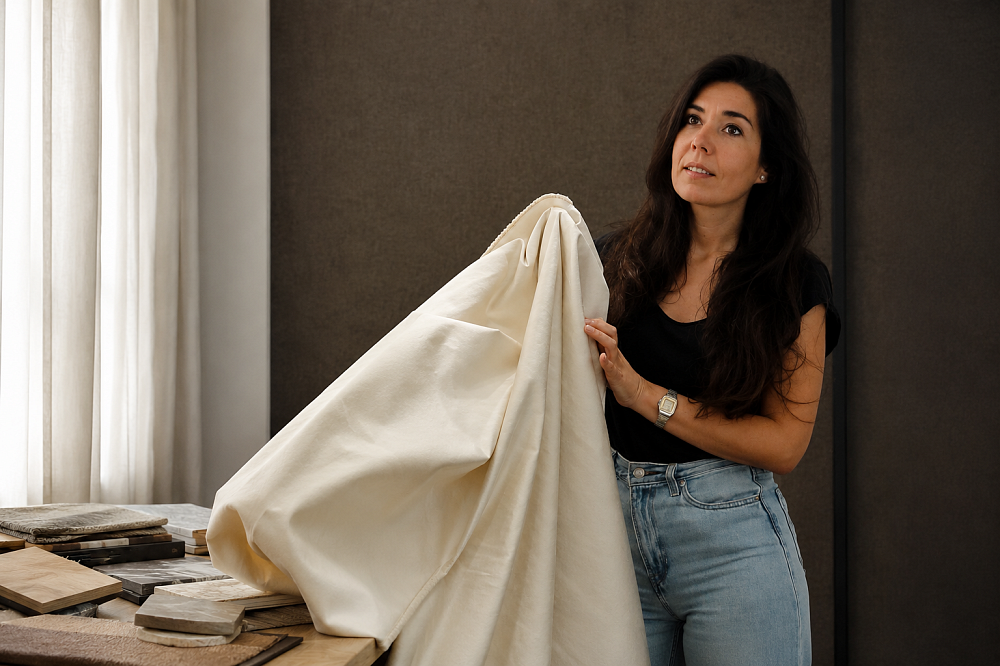
For Miriam Prada, design and construction were part of life from the very beginning. Raised in a family of engineers and construction professionals spanning several generations, she grew up surrounded by architecture, craftsmanship, materials, and conversations about how spaces are built, lived in, and experienced. Long before starting her own career, she had already developed a deep appreciation for materiality, detail, and the connection people have with their homes.
Today, with nearly 20 years of international experience across Spain and London, Miriam brings together technical expertise and a highly intuitive, design-led approach to interiors. Her work is rooted in the belief that materials should do more than simply look beautiful - they should create spaces that feel authentic, age gracefully, and improve the way people live.
In this O.A.K. Talks* session, Miriam reflects on how the industry’s relationship with materials has changed over the years, why natural materials like oak are regaining appreciation, and why more thoughtful, conscious design choices are shaping the future of healthier and more meaningful homes.
“Oak was always a key element in construction - in interiors, architecture and design,” she says. “It was always part of daily life. And it was always seen as something prestigious. Something people truly valued.”
Do you think the construction and design industry has changed the way people value materials like oak?
The industry has gone through huge shifts over the years. During the peak construction and property boom years - what many people call the “bubble” - everything became very fast. It was all about build, build, build. For the industry, those years were incredible. Development was booming, sales were strong, and design was moving quickly. But for materials themselves, I don’t think it was always positive. Materials lost some of their meaning and value. People often chose them automatically, without really understanding or appreciating them.
Now, I think that’s changing. We’re in a slower period today, and while that is difficult for the industry, I think it’s very good for materials. People are becoming more thoughtful. They want to understand what they’re choosing, how it’s made, and why it matters.
I remember growing up in the 1980s when materials carried real value and significance. During the construction and real estate boom, some of that appreciation disappeared. But now, I believe it’s returning.
Today, when people invest in materials like oak, they’re proud of those choices. They want quality, authenticity, and something that lasts. And in that sense, I think oak is regaining the appreciation it truly deserves.
There’s a huge focus today on sustainable design, environmental responsibility, and material transparency. But beyond the labels and certifications, what does true sustainability look like to you?
For me, sustainability is about understanding the full journey of a material - and that applies not only to wood, but to any material.
First: where does it come from?
Second: how is it produced?
Third: how far has it travelled to get to me?
And fourth - perhaps most importantly - how long is it actually going to last?
I think sustainability has become a marketing term in many industries. A product gets a certification or a label, and suddenly it’s described as “sustainable.” But real sustainability is much more complex than that. I always want to understand the full picture: the origin, the manufacturing process, the transport, the maintenance, and the lifespan.
And honestly, for me, the biggest measure of sustainability is longevity.
If I buy something and have to replace it in a year, that’s probably the least sustainable decision I can make. But if I invest in a material that lasts for generations, then that becomes one of the most sustainable choices possible. That’s something I always try to communicate in my projects: real sustainability is about durability, long-term value, and performance over time - not just trends or marketing language.
Today, we can trace almost everything we consume - from food ingredients to where our clothes are made. Why is it still so difficult to fully understand the materials we use in our homes? And how do you personally choose the suppliers and materials you trust?
I trust my suppliers, and I’m not someone who constantly changes suppliers. But at the same time, I’m always researching, visiting exhibitions, discovering new products, and asking very detailed questions. Because as we’ve said before, anyone can have a certification stamp. What really matters is understanding the full process behind the material.
How is it manufactured?
How many chemicals are involved?
How long will it last?
What maintenance does it require?
I don’t think you can choose materials properly without understanding all of those stages. And equally, relying only on a supplier’s sales pitch isn’t enough either.
The good thing today is that people have access to so much information. Even if you have no technical background, you can still research properly. You can even use AI to help guide you and ask: What questions should I be asking about this material? And then ask them.
Construction and interiors are major investments. You really need to understand what you’re bringing into your home and living with every day.
Miriam, you’ve worked on some of London’s most prestigious residential projects. What does real luxury in interior design mean to you?
Luxury today is often misunderstood. People associate luxury with recognisable brands or expensive products. There’s this idea of: if you know, you know. If something is famous or visibly expensive, people immediately label it as luxury.
I think true luxury is almost the opposite of popularity. Luxury should feel unique. If I had to define it, I would say luxury is something created specifically for a project, for a client, or for a particular purpose. It’s personal. It’s thoughtful. It’s not mass-produced or instantly recognisable. In fact, sometimes the less obvious something is, the more luxurious it becomes. And very often, true luxury comes from craftsmanship. It comes from materials. It comes from materiality itself.
A friend of mine always jokes and says, “Miriam, you’re such a materialist.” And honestly, it’s true. I love materials. I love craftsmanship. I love understanding how things are made. Because when you combine exceptional materials, skilled craftsmanship, and thoughtful design, the result naturally becomes exceptional.
When designing a space, how important is it to think about how materials will age over time - rather than simply how they look on day one?
I love ageing. I love ageing in people, and I love ageing in materials. I remember my mum worrying about getting older, and I told her: “Mum, you're beautiful.” I genuinely think there’s beauty in ageing. I feel the same way about interiors. I love seeing how spaces evolve over time and how materials develop character through use, light, and everyday life.
Of course, I completely respect the opposite point of view too. Some people don’t want to see scratches, marks, or visible wear - and that’s absolutely fine. There’s no right or wrong. That’s what makes design personal. But personally, I love when things age beautifully. I love when my cashmere ages. I love when marble ages. And I love how oak ages.
As a designer, though, my job is also to understand the client. If I know someone will struggle emotionally with visible wear or natural imperfections, I’m not going to push them towards a material that develops character over time. That would simply be the wrong design decision for them. But for me personally, the beauty of natural materials is exactly that evolution. Interiors that age naturally often become far more beautiful than spaces that remain static and untouched.
When you invest in materials that age well, you’re investing in something that can stay with you for decades - and often become even more meaningful over time.
Would you say people beginning to move away from “perfect” interiors and reconnect with more natural, authentic materials?
Definitely - and I think it’s a very positive shift. A few years ago, “prime” oak flooring - perfectly clean, uniform boards without knots, variation, or marks - was considered the premium option. People wanted everything flawless and consistent. But now, I think people are reconnecting with the beauty and honesty of natural materials. Knots, grain variation, texture, and imperfections are no longer seen as flaws. In many cases, they’ve become the most desirable part of the floor because they make the material feel real and authentic.
And that changes the conversation around waste and sustainability too. In the past, huge amounts of material were rejected simply because they didn’t fit this idea of perfection. Today, people are appreciating much more of the natural character of the wood, which means far more of the material can be used and valued.
The same thing happens with plank sizes. Clients often ask for extremely wide boards because they’ve seen them in magazines or on social media. But wider isn’t always better. Wood moves, buildings move, humidity changes - materials react naturally.
For me, good design is about balance. It’s about choosing something proportionate, practical, and right for the space - not simply following trends.
When a designer wants to transform a natural material like oak, but the craftsman or forester says, “This is how it naturally works,” who usually wins that conversation?
The forester wins. Design is an education process. I have knowledge in certain areas, but someone like a forester understands wood on a much deeper level than I do. So, if a forester tells me something about timber, I listen. That’s part of being a good designer - learning from the people who truly understand the materials you’re working with. If I’m designing with wood but refusing to listen to the people who know wood best, then that becomes ignorance. Well… maybe sometimes I still argue. But first, I should educate myself. And then, if I still disagree, at least I’m making that decision from a place of knowledge rather than ego.
The same applies to stone, metal, lighting - every material has specialists behind it. And at the end of the day, if I design blindly without listening to those people, then honestly, I’d say I’m a bad designer.
But having said that, there’s always a balance. Respecting expertise is important, but so is challenging standard solutions. I’ve spent much of my career questioning things and pushing manufacturers to think differently. And many of those ideas eventually became part of the catalogue.
That’s where innovation comes from - the conversation between craftsmanship, technical knowledge, and creative thinking. The best projects happen through collaboration between the designer and the maker.
*O.A.K. (Origin, Architecture, Knowledge) Talks by Ecohardwood is a conversation series exploring how to choose, use and understand oak — sharing practical insights from designers, architects and industry experts on materials, craftsmanship, sustainability, and creating better, healthier homes built to last for generations.